A magical character name is the first spell you cast on a reader. Before the character performs a single feat of magic, before the plot gives them purpose, before the world gives them context, the name has already done its work. Gandalf sounds ancient. Hermione sounds bookish. Rincewind sounds like someone who is perpetually about to fail at something important. Each of these names carries its character before the story earns it.
Most fantasy writers understand this intuitively but struggle to apply it systematically. They spend hours on magic systems and world history and political structures, then pick a character name in thirty seconds because the scene needs to start. The result is magical characters with names that belong to a different story, a different world, or no particular world at all. These seven rules fix that. Whether you are writing a novel, building a DnD campaign, or creating a character for a game, these principles will help you find names that do real narrative work. For specific naming help across every major fantasy tradition and DnD race, Wizard Names provides over 54 in-depth magical character naming guides built on authentic linguistic and cultural traditions.
Rule 1. The Name Must Sound Like It Belongs to a Real Language
The single most common mistake in magical character naming is inventing sounds without inventing a language. Real names feel real because they follow phonological rules, even when those rules are for a fictional language. Tolkien named his arcanists using real Old Norse, Old English, Quenya, and Sindarin because he understood that a name built on genuine linguistic roots carries subconscious weight that pure invention cannot replicate.
You do not need to build a complete language to apply this principle. You need to decide which real-world language tradition your magical culture draws from and then stay consistent. A medieval European magical tradition should draw from Latin, Old French, or Germanic roots. A Norse-influenced magic system should use Old Norse phonology. A desert magic tradition should draw from Arabic or Persian roots. Consistency within a tradition is what makes a set of names feel like they belong to the same world rather than different ones.
The practical test is simple. Say the name aloud, then say three other names from the same world. If they all feel like they could exist in the same language, you have a tradition. If one sounds like it belongs in a completely different book, that is the one to reconsider.
Rule 2. The Name Should Encode the Character’s Essential Quality
The best magical character names carry meaning that deepens the character rather than simply labeling them. Saruman means cunning man in Old English. That is not a description of his role. It is a description of his quality, which happens to be both his greatest strength and his fatal flaw. The name announced the character’s undoing before the story proved it.
For magical characters specifically, consider whether the name’s meaning connects to the type of magic the character practices. A fire mage named Emberlind carries the magic in the name without announcing it directly. A divination arcanist named Verity carries the core quality of their practice. The connection should be discoverable rather than obvious.
Rule 3. Consider Where the Name Came From in the Story’s World
Every name in the real world came from somewhere. Parents chose it, a culture produced it, a tradition demanded it, or a person rejected the given name and chose their own. The same should be true in fiction. A magical character’s name is more interesting when you know not just what it sounds like but why they have it.
Did the parents name the character before the magical ability manifested, so the name has nothing to do with magic? That creates interesting tension. Did the character rename themselves when they entered magical training, rejecting the birth name as part of taking on a new identity? That tells you something specific about how they relate to their past. Did the magical community assign the name based on a demonstrated quality? That reveals how the community perceives the character.
The name’s origin does not need to be stated explicitly in the text. But knowing it shapes how you write the character’s relationship with the name, which readers feel even when they cannot articulate what they are responding to.
Rule 4. The Name Must Work at the Table or on the Page
This rule is particularly important for game masters and tabletop players. A name that cannot be pronounced consistently will become a different name by session three. If six players are saying a character’s name six different ways across a four-hour session, the name has failed its basic function.
For novelists, the equivalent problem is the name that pulls readers out of the narrative every time they encounter it because they are not sure how to hear it in their head. Test every magical character name by saying it aloud in a full sentence. Say it quickly. Say it in the middle of dialogue. Say it when you are tired and not paying careful attention to pronunciation. If it survives all three tests at roughly the same sound, it works.
Rule 5. Titles and Epithets Are Part of the Name
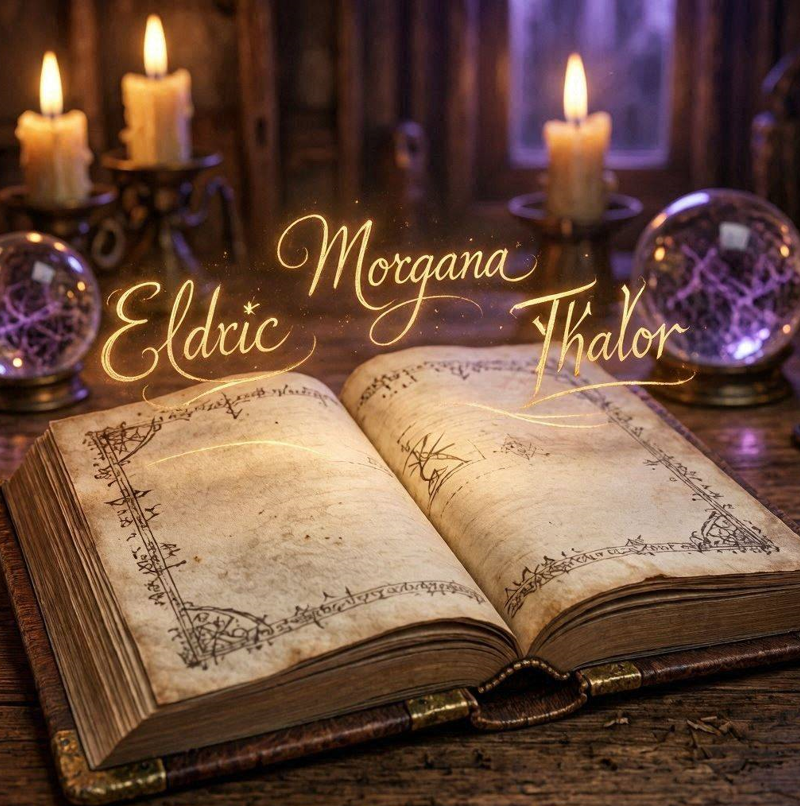
Gandalf the Grey. Raistlin Majere the Black Robe. Merlin the Wise. The epithet is not a descriptor attached to the name. It is part of the name itself, and in many magical traditions it is the most important part because it announces what the character earned rather than what they were given.
For magical characters specifically, epithets carry particular weight because magic is a practice rather than a birthright in most fantasy traditions. The epithet announces that the character did something with their ability. The Grey announces a position in a hierarchy. The Wise announces a quality that others recognized. The Unbroken announces something survived.
The most effective approach is to start your magical character without an epithet and earn one during the story. The moment when a community assigns an epithet to a magical character is often one of the most powerful scenes available to a fantasy writer.
Rule 6. The Name Should Change When the Character Changes
Gandalf the Grey becomes Gandalf the White. Anakin Skywalker becomes Darth Vader. The name change is not just a plot event. It is a statement about identity. When a magical character undergoes a fundamental transformation, the name change marks the boundary between who they were and who they became.
This principle works at multiple scales. A full name change signals the most dramatic transformation. An epithet change signals a significant shift within a continuing identity. A preference change, where the character starts going by a different shortened version of the same name, signals a subtler shift that readers will feel without necessarily being able to articulate.
For fantasy writers building magical systems, consider how your world handles name changes after significant magical events. Does a wizard who survives a catastrophic magical failure carry the same name? These world-building questions produce the kind of texture that makes a magical system feel genuinely lived-in.
Rule 7. Research Before You Invent
The most common reason for weak magical character names is inventing before researching. Real naming traditions from mythology, history, and existing fantasy literature contain naming conventions that have already been tested against human response over centuries or decades. Drawing from those traditions is not laziness. It is using the evidence about what actually works.
Resources for magical character naming research are more comprehensive than they have ever been. Whether you are naming a dwarf arcanist, an elf illusionist, a tiefling scholar, or a human wizard with a specific cultural background, WizardNames.com provides specialized guides covering over 54 magical character traditions built on authentic phonological and cultural roots.
See also: Working With Ancestral Craft Names: How to Discover Your Family’s Magical Heritage
Frequently Asked Questions
Do magical character names need to have real meanings?
They do not need to have dictionary definitions, but the best magical character names carry some form of meaning, whether it is a direct root translation, a phonological tradition that signals cultural origin, or an implied quality that deepens with familiarity. Completely meaningless invented sounds tend to feel thin over time because there is nothing beneath the surface for a reader or player to find. Even a small meaningful element, a Latin root, a Norse compound, a nature word, gives the name depth it would not otherwise have.
How many syllables should a wizard name have?
There is no fixed rule, but two to three syllables work for most purposes. One syllable creates memorable economy but can feel too casual for powerful arcanists unless paired with a strong epithet. Four or more syllables create gravitas but can become difficult to use consistently in dialogue and narration. The most iconic wizard names tend to be two to three syllables with a clear stress pattern: GAN-dalf, her-MY-oh-nee, RIN-ce-wind, MER-lin. That rhythm feels natural at both reading pace and speaking pace.
Should I avoid names that other fantasy works have already used?
You should avoid names that are so closely associated with a specific character that readers cannot separate the name from the original. Gandalf, Dumbledore, and Merlin are effectively off the table for serious use because they bring too much existing context. But the naming traditions those names draw from are entirely available. Old Norse compound names, Welsh-adjacent musical names, and Latin scholarly names all produced those iconic choices and can produce new ones. Research the tradition rather than copying the name.
How do I name a wizard character for DnD specifically?
DnD wizard naming works best when the name matches the character’s race, background, and magical school simultaneously. A High Elf arcanist should sound different from a Dwarf arcanist, which should sound different from a Tiefling arcanist. The race provides the phonological tradition, the background provides the social context, and the arcane school provides the thematic vocabulary for the surname or epithet. Specialized DnD race-specific naming guides exist for every major race and can save significant research time.
Final Thoughts
The test for any magical character name is always the same. Say the full name at the pace the narrative would use it. If it sounds like the character you already know, if it carries the weight the character deserves, and if you cannot imagine anyone else in your story carrying it, you found the right name. WizardNames covers over 54 magical character naming traditions, from DnD race-specific guides to cultural and literary naming conventions, so the research groundwork is already done for you. The first spell has been cast. The reader will feel it before they know why.