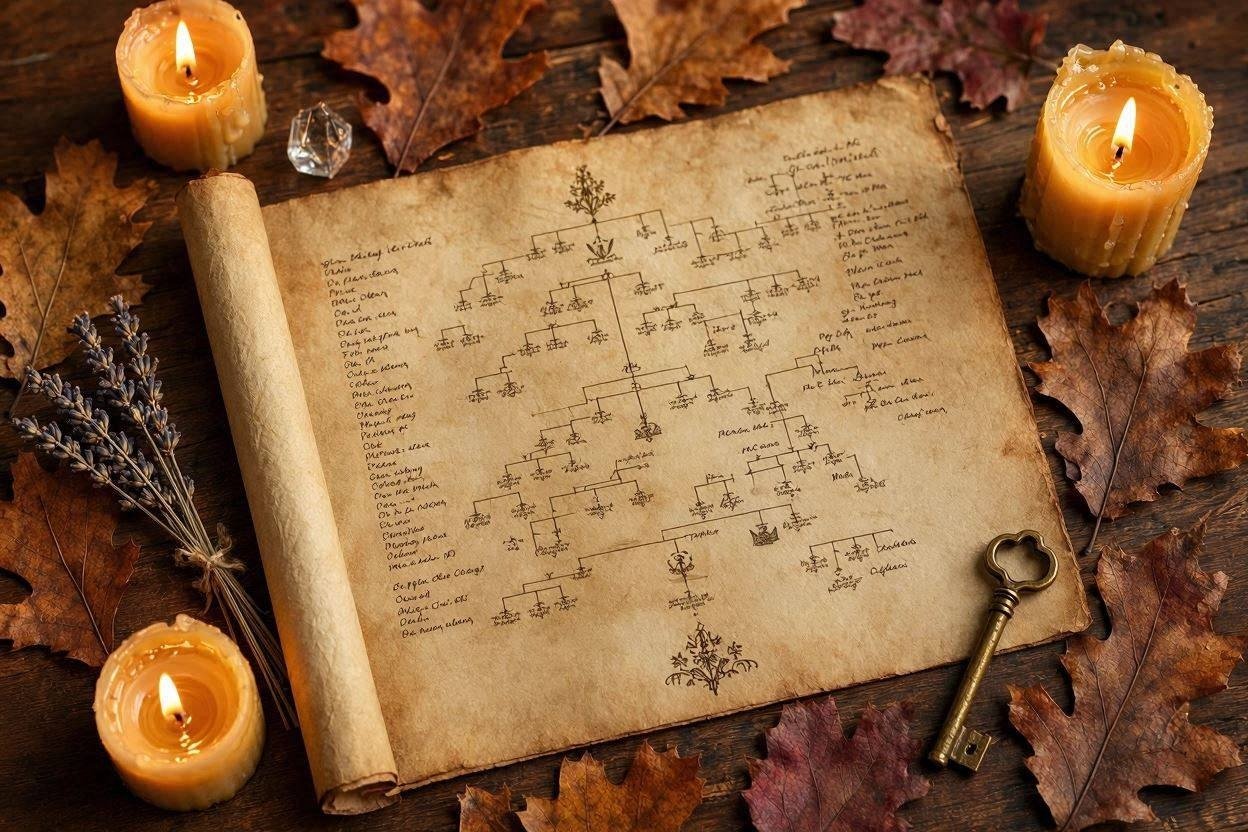
Some of the most powerful craft names are the ones already written in your family tree. When you speak an ancestor’s name during ritual, you weave centuries of magical practice into your own path. That is why more modern witches are turning to genealogy as a naming source. Instead of choosing an inventive-sounding name, they honor a grandmother, a persecuted ancestor, or a forgotten cunning-woman by carrying her name into their craft.
This guide walks you through finding ancestral craft names, researching your family’s magical heritage, and safely adopting a name that connects you to your bloodline’s spiritual history. Whether you have documented witch trial ancestors or simply feel drawn to your matriarchal line, this practice deepens your craft in ways no invented name can. If you need inspiration during your research, tools like the witch names generator can help you explore historical name variations across cultures.
Why Ancestral Craft Names Carry Power
Ancestral craft names carry three types of power that modern-invented names cannot match. First, they create instant lineage — you are not starting from scratch but continuing a legacy. Second, they connect you to actual people who lived, practiced, and died with those names attached to them. Third, they invite your ancestors into your work as guides, protectors, and teachers.
Many witches who have taken ancestral names report a distinct shift in their practice. Rituals feel weightier. Meditation becomes deeper. Intuition grows stronger. This is not coincidence — it is the natural result of honoring the ancestors who came before you.
Step 1: Start With Your Living Family
Before diving into old records, talk to living relatives. Grandparents, great-aunts, and older cousins often carry family history that never made it to paper. Ask specifically about the women in your family — who was known for herbal remedies? Who was called “eccentric” or “strange”? Who kept the family stories alive?
Take notes on names that feel significant. Sometimes the name that catches your attention is exactly the ancestor calling to you. Pay attention to naming patterns too. Families often reused names across generations, which can help you trace back further with just a few interviews.
Do not skip this step, even if your relatives seem to have “no history.” Every family has stories waiting to be uncovered — you just need to ask the right questions.
Step 2: Research Historical Witch Trials
If your ancestry connects to regions with documented witch trials, your search becomes far more specific. The Salem Witch Trials of 1692, the Pendle Witches of Lancashire in 1612, and the widespread European trials from 1400 to 1700 produced extensive court records that survive today.
Free resources like FamilySearch.org and Ancestry.com allow you to search these records directly. Look for accused witches with your surname or connected to your family’s geographic origin. Even if you cannot prove direct descent, ancestors from the same village during trial years may be spiritual kin worth honoring.
Genealogy work is deep spiritual practice on its own. Set aside quiet, ritual time for your research. Light a candle before opening records. Keep a dedicated notebook where you record every name that catches your attention. These small acts turn genealogy from casual hobby into ancestral work.
Step 3: Look Beyond Trial Records
Not all magical ancestors were accused witches. In fact, most were cunning-folk, midwives, herbalists, and wise women who practiced quietly for generations. To find these ancestors, look at:
- Church records mentioning “unusual” burials or excommunications
- Newspaper archives noting local herbalists or fortune-tellers
- Local historical societies with cottage and folk magic records
- Cemetery records where women were buried without husbands or with strange epitaphs
- Family Bibles listing unusual first names for daughters
Look for women who never married, worked as midwives, ran apothecaries, or were noted for herbal knowledge. These are often the family witches whose contributions were quietly celebrated but rarely documented.
Step 4: Choose Your Ancestral Name With Ritual
Once you have identified candidate names, do not simply pick the one that sounds nicest. Instead, sit with each name during ritual. Light a candle, hold a photo or written name, and ask for a sign of connection. Note dreams, meditation visions, and synchronicities over the following two weeks.
The right ancestral name usually announces itself clearly. You may hear it whispered during meditation. You may find historical records appearing unexpectedly. Family stories may resurface that you had forgotten. When you feel certain, you are ready for the next step.
Step 5: Honor Before Adopting
Before formally taking an ancestral name, you must honor the ancestor first. This is spiritual etiquette that protects both you and the family line. Create a small altar with:
- A candle in a color meaningful to the ancestor (or white as default)
- Fresh flowers or dried herbs the ancestor would have known
- Water or wine as an offering
- A written statement of your intention to carry her name forward
Sit at the altar and speak your intention aloud. Explain who you are, why you want to carry her name, and what you promise to do with it. Ask for her blessing and guidance. Leave the altar undisturbed for at least three days before taking the name.
Step 6: Perform Your Naming Ritual
Once you have received signs of blessing, perform a formal naming ritual. This can be as elaborate or as simple as your practice requires. A basic naming ritual includes:
- A cleansing bath with salt and rosemary
- Fresh candles and offerings on your ancestor altar
- A written vow that names your ancestral name and your commitments
- Speaking the name aloud three times in ritual space
- A symbolic gesture of accepting the name (tattoo, jewelry, or written pledge)
After the ritual, use your ancestral name in all magical work for at least one lunar cycle. Notice how your practice shifts. Notice which rituals feel more powerful. This trial period tells you whether the name is truly yours or whether another ancestor is still calling.
Protection When Taking a Persecuted Ancestor’s Name
If your ancestral name comes from someone persecuted, executed, or hurt for their craft, additional protection is essential. These names carry both power and trauma. Never take such a name without spiritual protection.
Before adopting a persecuted ancestor’s name, work with a protection deity you trust. Consecrate your name with black salt, iron, and rowan. Ask your ancestor if she consents to being named in your craft — some persecuted witches want their names honored, while others want them buried. Respect whatever answer you receive.
Consider using the name only in private ritual rather than public introduction. This protects both you and your ancestor from repeating the exposure that led to her harm.
See also: IT Asset Relocation: How Businesses Can Protect Valuable Technology Assets
Blending Ancestral Names With Modern Practice
Your ancestral name does not have to stand alone. Many modern witches combine ancestral names with modern craft names to honor both heritage and personal identity. For example, you might use “Margaret” (your great-great-grandmother’s name) paired with “Nightshade” (a modern chosen surname).
This blending honors your ancestor while acknowledging your unique modern path. It works especially well if your ancestral name feels heavy or historically loaded. The combination lets you carry the ancestor’s power without being entirely defined by her era.
Signs Your Ancestor Approves
After adopting your ancestral name, watch for signs of approval or discomfort. Approval signs include unexpected career opportunities aligned with your craft, deeper meditation experiences, dreams featuring your ancestor, synchronicities appearing regularly, and increased intuition during divination.
Warning signs mean the name is not right for you. These include unexplained fatigue after ritual work, negative dreams, feeling weighed down when using the name, and sudden family conflicts. If you experience warning signs, return to the altar, apologize respectfully, and release the name. Your ancestor will guide you toward the right name.
Final Thoughts
al Thoughts
Ancestral craft names transform your practice from personal magic into family legacy. When you speak an ancestor’s name, you invite her wisdom, protection, and centuries of accumulated craft into every ritual. This is not a decision to make quickly — but for those who do the work of research, honoring, and ritual, an ancestral name becomes one of the most sacred elements of their entire practice.
Take your time with this process. Ancestral naming is not a weekend project. It can take months of research, meditation, and ritual to identify and formally adopt the right name. Every step you take deepens your relationship with your lineage. The research itself becomes an act of devotion, and the waiting periods teach you patience and respect for spiritual timing.
Your ancestors are already watching. Some have been waiting generations for you to notice them. When you begin this search, you are not choosing a name — you are answering a call that has been waiting your whole life. Every witch who has walked this path reports the same thing: the name finds you, not the other way around. For further exploration of witch name traditions across cultures, visit Witch Names Generator, a resource that maps historical witch naming conventions from Salem to Pendle to European village magic.